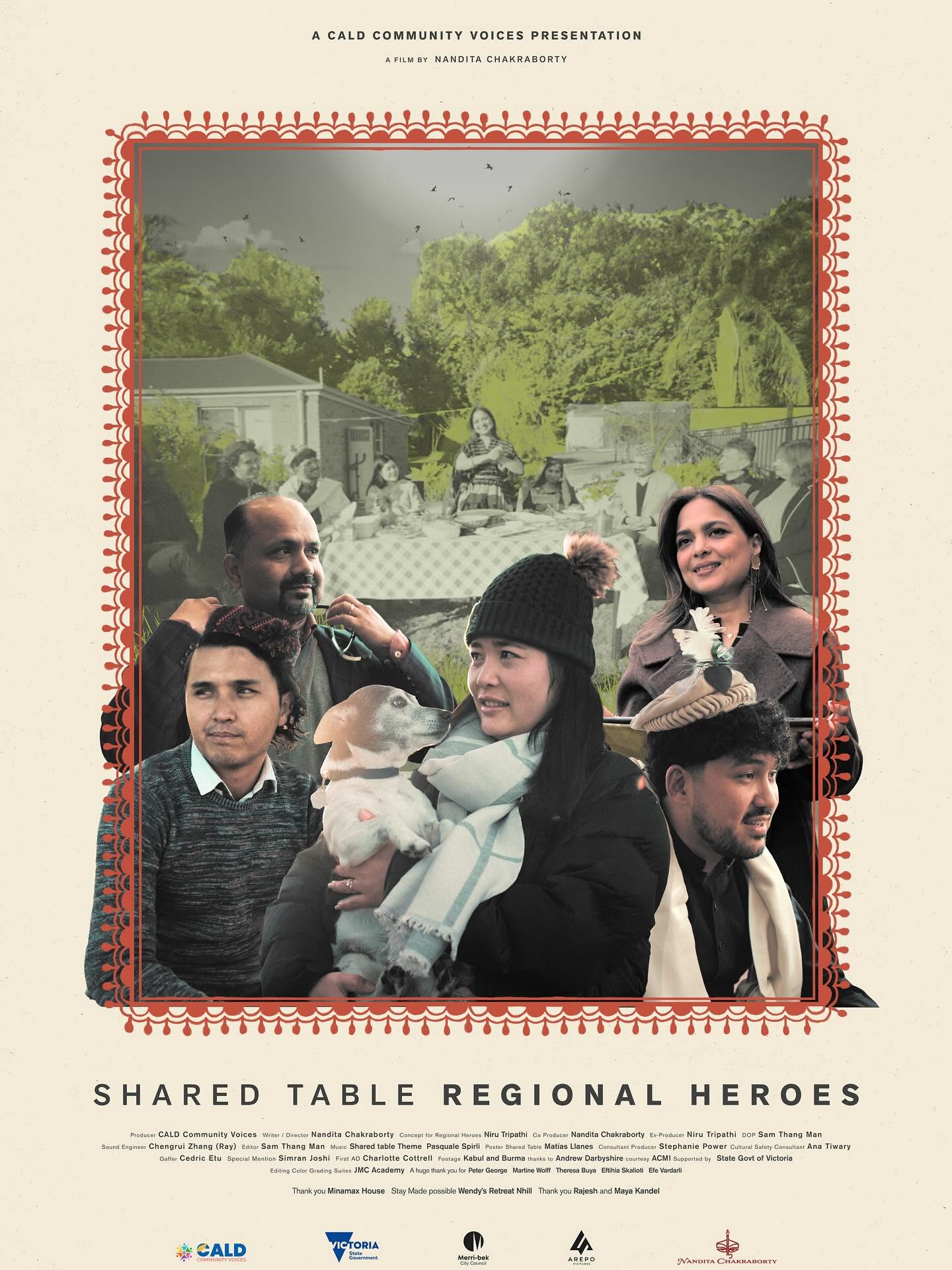
Around every table sits a collection of stories, and “Shared Table: Regional Heroes” explores how these personal journeys contribute to the ever-evolving fabric of Australian life. Directed by Nandita Chakraborty, the documentary travels across regional Victoria, introducing audiences to migrants who have built lives far from the places they once called home. Through intimate conversations, the film explores identity, belonging, and the experience of creating a future in unfamiliar surroundings. Each participant brings a unique history shaped by different countries of origin, cultural traditions, and personal circumstances. From leaving behind familiar communities to finding connection in Australia, their experiences reveal the many paths that lead people to a new home.
Migration may be a hot topic, even one of contention for some, but “Shared Table: Regional Heroes” is not a political documentary. It focuses on the real lives of people. What they have endured and the lives they have created. It is a breathtaking portrait of starting over and finding belonging. A narrative that is defined not only by what these individuals have overcome, but by the warmth, generosity, and cultural richness they share with those around them.
Uprooting is stressful and resettling isn’t easy, especially in a place where everything is different, including the language. The participants share harrowing stories of how and why they left their countries, the lives they left behind, and the cultural traditions and hope they brought with them for a better life in a place where freedom and possibilities exist as naturally as the expansive skies.
Beyond their individual journeys, the documentary also becomes a celebration of the regional communities that open their doors to new neighbors. Through its exploration of places such as Shepparton, Wimmera, and Gippsland, “Shared Table: Regional Heroes” captures a side of Australia often overlooked on screen. These rural communities have become places where new connections are formed and where people from different cultures and backgrounds come together to create a shared sense of home. It’s a beautiful thing to feel welcomed and the film depicts how helpful hosts and language learning centers have helped migrants adapt and assimilate to life in these communities and prosper.
Visually, “Shared Table: Regional Heroes” possesses a warmth that complements its themes beautifully. Cinematographer Samuel Thang Man captures the subjects, their homes, and communal spaces with an inviting intimacy that immediately draws the audience into the frame. The lighting often feels soft and welcoming, creating an atmosphere that mirrors the warm personalities of the people on screen. There is a sense that the film is less interested in observing its participants from a distance than in sitting beside them. That visual approach strengthens the documentary’s central idea that understanding begins through conversation and proximity.
As the individuals converge at the end of the film to share a meal of their cultures’ cuisines with each other and MasterChef finalist Kishwar Chowdhury, “Shared Table: Regional Heroes” suggests that Australia’s identity is not fixed but constantly evolving. The nation’s “shared table” is shaped by the people who gather around it, bringing with them different traditions, perspectives, and histories. The film recognizes that while life can sometimes uproot us from familiar places and traditions, new roots can take hold in unexpected soil. When given a chance to thrive, something beautiful has the opportunity to grow. Traditions can still flourish in new land. The Australian shared table has room for everyone, and when together, and all voices are heard, it’s a vibrant, magnificent place to sit.
See “Shared Table: Regional Heroes” screening at Cinema Nova July 14th as part of the Melbourne Documentary Film Festival.